User:Martina/T6 Assessment: Difference between revisions
| Line 110: | Line 110: | ||
</gallery> | </gallery> | ||
== | == ''☆The future☆'' == | ||
* mention aim for the grad project | * mention aim for the grad project | ||
* how do you see this project grow in the future | * how do you see this project grow in the future | ||
Revision as of 22:19, 19 June 2026
EVERYTHING IS STILL IN PROGRESS and has to be re-written! please be patient <3
Special issues + their relevance to the graduation project
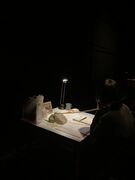
Special Issue #25: Playing with and modifying a rotary phone to perform a different function helped remove the intimidation I felt around exploring hardware. I discovered the value of tinkering, taking devices apart and understanding how they work. This curiosity has remained a central part of my practice and became a key aspect of my graduation project. Looking back, I think that without this early introduction to basic circuitry, I would not have developed the confidence that eventually led me to create my low-tech radio wave receivers.

Special Issue #26: Main reflection: imagining altered webpages as weaving patterns. Connecting the structure of the web with textile pattern making led me to explore how physical practices, such as quilting, could be translated into digital environments (through the webring).
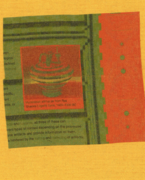
Special Issue #26: Using my previous practice in traditional mediums (textiles), I explored ways to translate them into the digital. This was the first project where I allowed myself to reintroduce earlier making methods into XPUB. The project marked the beginning of an exploration that I later describe in my graduation research as "the bending of the material" - finding different materials to print on in order to enhance the translation or merging of material worlds.
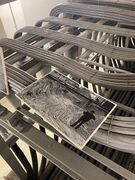
Special Issue #27: The visit to the Telecom museum was extremely inspiring, especially looking at the massive cabling infrastructure they had set up in the basement. What also intrigued me was the chronology of the communication narrative and see it change in materiality (cabling methods, using paper, tin can methods, telcom services, telephones, mobile phones). Apart from my personal interest, seeing all of these devices and ways of telling the buildings history somehow inspired my own research (especially in the visual storytelling part of the thesis).


the development of your reading/writing practice across the 2 years
My personal reader is my Are.na account! I found myself collecting a lot of visual material and texts related to:
- scanned and archival documentation
- website playgrounds
- historical timekeeping devices
- preservation methods
- future archaeologies
- sonic fieldwork
- repurposing old technologies for new purposes
- radio

I think these interests intertwine and often merge around themes of preservation, archival studies, material investigation, and speculation.
- the process of writing the thesis, realising a new-found love for writing, feeling more comfortable talking introspectively about my work (include image of all the handwritten thesis corrections?). The thesis and its process has made me appreciate writing as a new 'medium', I want to incorporate it more into my practice
- From the beginning of this year, I made a promise with myself to read more, be it fiction or non-fiction. I would catagorise myself as a slow reader, but I have been practicing a steady pace, here are some books I have read: (Include the list of fiction books read this year! and the note taking part)
The overall prototyping process
Include notes on:
- The first year allowed me to explore many different techniques and mediums, those that stuck through were basic coding elements and sound making devices (mention the workshops about the sound board and the residency at BWDUA). Both the workshop and the residency were there as practice, with no pressure to produce something final at the end - so in that way, I saw it as a great opportunity to term it as a prototyping process with a different public. (include one image of each project here)
- Treating this time as a continous exploration to different mediums - more open to a multidisciplinary approach (I really believe in the phrase: a jack of a all trades but a master of none).
- Prototyping has made me appreciate time, specifically taking time with my work and not rush the process. Having many iterations or sketches of the work often makes me feel better about the results, the outputs are clearer and I understand the process better.
Thesis + publication
‘A Familiar Materiality: Merging the material worlds of crafts and communication technology’
My thesis looks for parallels between the making processes of craft and communication technology. Familiarity with materiality of both craft and electronic devices results in lowering the barriers of learning new skills in both fields by looking into the workings of crystal radio.
It talks about:
- The similar roles of radio and craft were very prominent while I was growing up.
- Observing how the need for communication emerged in ways that parallel craftsmanship.
- Craft as a self-sustaining practice, mentioning DIY repair culture while also reflecting on the disappearance of craft in favor of fast consumables in Malta.
- The metaphor of 'the spin', as a way to understand the cycles of crafting, kin and electronic manufacturing.
The overall tone and narrative of the thesis writing were very much connected to my project, and I see them almost as part of the same making process. After submitting the thesis, I knew I wanted to design a printed version of it, keeping in mind the motion of the hand coiling that I talk about throughout the thesis.
The printed thesis includes more visual imagery, alongside drawings that I made for each chapter and subchapter. Each drawing foreshadows something that is discussed in that section.
I really enjoyed returning to drawing, not as a form of procrastination, but because I began to treat these drawings as small diagrams. By drawing these scenes, objects, and electronic components, I felt that I could understand them better.
The thesis is hand-bound using copper wire, keeping the project's main material present within the written component as well. In doing so, it bends the conventions and limitations of traditional bookbinding.


Overall 2nd year research thoughts
- Initially, I was very interested in making DIY tools (such as recording devices, microphones, printers/markers) for other people, especially thinking about how these self-made tools could be made more accessible for people to use in their own artistic practice or research. This motivation became particularly strong after returning from my residency in September 2025.
- Given how collective and community-driven my practice was before XPUB, I realised that I had forgotten to ask myself what I wanted from this research and what questions I wanted to answer. By looking at my family stories, their hobbies, and their ways of building knowledge, I began to focus on crafting techniques and electronic tinkering, paying closer attention to the similarities between them. Eventually, I narrowed my research down to DIY radio wave receivers, as they share a similar hands-on approach to making as Maltese crafts such as Ganutell.
- From there, a fascination with communication devices grew, particularly with their materiality. I also wanted to approach my intimidation around learning electronics by applying understandings that already felt familiar through craft. The research became an opportunity to face that challenge and use it as a way of learning something new.
- A small note about the try-out nights: both sessions were a great way to test these physical experiments with a public. I noticed that many people were curious about the copper coils and the combination of different materials present in the installation. Beyond this, I was also really pleased by the interest people showed in the family stories I shared in my thesis. Somehow, when I explained how these stories related to the project, people seemed to understand the work more deeply. At the same time, many opened up about their own first encounters with radio, or about learning a craft themselves. I valued these conversations because they showed me that people could still connect with the materials and narratives, even if they had not shared the same experiences. There was a sense of familiarity that emerged through the stories and objects, creating unexpected points of connection.


Grad show!
Project:
include info about project!
- I am currently constructing a shelf built entirely from recycled wood and free wooden furniture. One part of it is a shoe rack, one section was donated by Kamo, and the top part was originally an open shelf for my paintbrushes that I used ten years ago. The rest is made from wood that was left in the trash bunker at WDKA. This practice of collecting found materials and scraps goes hand in hand with the second chapter of my thesis, where the accumulation of materials becomes a way of resource-finding for DIY assembly and crafting.
- The other components currently connecting the smaller pieces of the shelf together are recycled copper wire and cables taken from the bin at Interaction Station, along with many other cables that I have collected (with more soon to come).
- The idea is to bind copper coils to different parts of the shelf while connecting them all to the same circuitry, which will connect to an amplifier and headphones. Visitors will be able to listen to signals being picked up in the space and experiment with how the placement of copper affects the signal. For example, does the signal become weaker or stronger when the copper is coiled around the edge of the shelf?
- Some aspects of the construction are also inspired by my father's radio-making documentation, parts of which will be exhibited as images printed on fabric. These will resemble a photo album and draw on familiar materials and techniques, such as fabric and embroidery.
- I plan to install wheels so that people can move the shelf around and pick up different signals during my interactive presentation on Saturday the 4th.


☆The future☆
- mention aim for the grad project
- how do you see this project grow in the future