
User:Vitrinekast/Proposal: Difference between revisions
Vitrinekast (talk | contribs) No edit summary |
Vitrinekast (talk | contribs) No edit summary |
||
| (22 intermediate revisions by the same user not shown) | |||
| Line 1: | Line 1: | ||
__NOTOC__ | |||
[[File:Applebiteme.jpg|thumb|right|180px|Apple certified Modifier]] | |||
''Make: synthesizers after the apocalypse'' | |||
In this project, I will research the various ways in which abandoned media can be repurposed into sound devices. I consider "abandoned media" to be discarded devices that no longer serve their original intended purpose yet could still function as something else. For instance, a printer that has an “Internal Communication Problem” being repurposed into a percussive instrument, as happened in Printer Jam <ref>Printer Jam: Get a grip on everyday life with OSC (Gulaschprogrammiernacht 2024). See https://media.ccc.de/v/gpn22-457-printer-jam-get-a-grip-on-everyday-life-with-osc.</ref>. I’ll explore the ideas of speculative sound circuits, where playful and absurdist methodologies are applied to create sound using various unlikely technological devices (Richards, 2018) <ref>John Richards. Speculative Sound Circuits. 2018. DOI: 10.14236/ewic/EVAC18.33</ref> , and Salvage Computing<ref>‘Salvage computing’ (no date) ''Salvage computing''. https://damaged.bleu255.com/Salvage_Computing/ (Accessed: November 22, 2024).</ref>. This will happen in a series of DIY/DIWO workshops/hangouts. The workshops will be hosted at Klankschool<ref>Klankschool is a community operating a space (and a server) in the south of Rotterdam. Its members share a common interest in performances, sound art, improvisation, noise, … Each member is a teacher, student, musician, janitor and more. The motivation to have a community-run space is to share sounds, work on projects, organise events, hang out, exhibit works, learn, teach and listen. See https://klank.school/</ref>, together with Riviera Taylor. | |||
<span id="salvaging-sound-devices"></span> | |||
=== Salvaging sound devices === | === Salvaging sound devices === | ||
<blockquote> | <blockquote>The real long-term future of computing consists of figuring out how to make the best possible use we can out of the literal millions of devices which already exist Solderpunk, 2020, Cited in de Valk, 2022)<ref>‘Salvage computing’ (no date) ''Salvage computing''. https://damaged.bleu255.com/Salvage_Computing/ (Accessed: November 22, 2024).</ref> | ||
</blockquote> | </blockquote> | ||
Buying new (electronic) parts | Buying new (electronic) parts and components is usually cheaper than repairing or salvaging. Even more conveniently, in the online community of DIY synthesizers, it is common practice to share an Mouser Project Cart<ref>A digital shopping cart provided by Mouser Electronics, a large distributor of electronic components. See https://eu.mouser.com/Tools/ProjectCartSharing</ref> alongside the schematics, when publishing your project. This allows you to buy all the needed parts within just a few clicks. To me, this introduces the idea that you <span style="font-style: italic; color: tomato; text-shadow: 0px 0px 10px tomato; font-weight: bold;">need</span> to buy these super specific components in order to succeed, instead of making the inconveniences that come with salvaging part of the creative process. I’ve found that the DIY/DIWO moments where these notions are less prominent, way more empowering and educational. | ||
Here are some samples I’ve collected during workshops: | |||
{{audio|mp3=https://pzwiki.wdka.nl/mw-mediadesign/images/d/d2/Vitrinekast_proposal_workshop_1.mp3|style=width:100%}} | |||
{{audio|mp3=https://pzwiki.wdka.nl/mw-mediadesign/images/5/51/Vitrinekast_proposal_workshop_2.mp3|style=width:100%}} | |||
{{audio|mp3=https://pzwiki.wdka.nl/mw-mediadesign/images/6/66/Vitrinekast_proposal_workshop_3.mp3|style=width:100%}} | |||
<span id="diwo-hangouts"></span> | |||
=== DIWO Hangouts === | === DIWO Hangouts === | ||
During the hangouts, we will explore various methods around salvaging components | During the hangouts, we will explore various methods around salvaging components and dismantling devices, making our own instruments using these materials, live coding hardware through MQTT/OSC<ref>MQTT and OSC are messaging protocols. MQTT is used for small IoT devices, OSC usually for sound software/hardware. See https://en.wikipedia.org/wiki/MQTT and https://en.wikipedia.org/wiki/Open_Sound_Control</ref> servers & applications, and everything in between. Ultimately, they could lead up to a BYOP (Bring Your Own Printer) Orchestra. The hangouts will be held at the Klankschool and involve the Klankschool community. The hangouts are hosted in collaboration with Riviera Taylor, who’s writing a thesis about [[System Administration and Server Maintenance]], and creating her project around Klankschool too. | ||
<span id="collaboration-with-riviera-taylor"></span> | |||
=== Collaboration with Riviera Taylor === | |||
Part of this project is a collaboration with [[User:Riviera|Riviera]]. Me and Riviera will divide the responsibility of hosting, where (in a nutshell) Riviera will focus more on the server side of things and my focus will be around hardware. Together, we will document the hangouts thoroughly in Markdown. We will set up a documentation system, that (due to markdowns fantastic nesting abilities) can have the various outlets we would like. For instance, in the format of a newsletter to be sent out to the community of Klankschool, their archive, parts of my thesis, and Riviera’s thesis. | |||
Our collaboration will be one with a lowercase c, where we will work together and alongside one another, but are not dependent on each other. | |||
<span id="who"></span> | |||
== Who == | == Who == | ||
| Line 21: | Line 38: | ||
* Trashure expert Joak | * Trashure expert Joak | ||
* Operator Radio to talk about post apocalyptic electronic music, but also to create the workshop in a different environment | * Operator Radio to talk about post apocalyptic electronic music, but also to create the workshop in a different environment | ||
* Roodkapje to host events | * Roodkapje to host events such as the BYOP orchestra | ||
* XPUB community | * XPUB community | ||
* Creative Coding Utrecht - space to host events | * Creative Coding Utrecht - space to host events | ||
<span id="why"></span> | |||
== Why == | == Why == | ||
When reading about Salvage Computing I got very excited, as it could give me a different vocabulary when working with salvaged electronic components as a material. The last year I’ve been a part of various workshops around DIY/Electronics/Circuit Bending, etc., and I’ve been increasingly surprised by the way some people spoke about the materials being used. Especially around material that is “broken” (what is broken anyway, who decides when something is broken), it was sometimes seen as valueless and waste, to be discarded and not thought about again. | |||
Instead of turning this project into a consumer blaming, finger-pointing | Instead of turning this project into a consumer-blaming, finger-pointing project, I want to take the opportunity to explore if it is actually possible to go in full-salvage mode. What workflows do I need to come up with to salvage these components? Which are the most salvageable? How to recognize them? What can they be used for? And how to deal with the carcass of the printer? Is the approach a viable way of working, or only for those privileged enough where they can actually spend this much time? | ||
<span id="when"></span> | <span id="when"></span> | ||
== When == | == When == | ||
<div class=" | <div class="thumb tright"> | ||
<div class="thumbinner" style="width:420px;"> | |||
<img src="https://vignette.wikia.nocookie.net/thegoodplace/images/a/a7/Jeremy_Bearimy.jpeg/revision/latest?cb=20181026224942" style="width: 100%"> | |||
<div class="thumbcaption"> | |||
Keeping track of time with [https://www.youtube.com/watch?v=RFm9ClqlGuo Jeremy Bearimy] | |||
</div> | |||
</div> | </div> | ||
<span id=" | </div> | ||
== | <span id="november"></span> | ||
==== November ==== | |||
''!No read november!'' | |||
* Start salvaging an inventory & investigate recipes | |||
* Continuation of [[the repair club at klankschool]] | |||
* Investigate static site generators for Markdown2HTML2print documentation | |||
* write this proposal | |||
<span id=" | <span id="december"></span> | ||
== | ==== December ==== | ||
* | * Contact some from the “who” list for possible workshops/DIWO events | ||
* | * Continue salvaging & documenting | ||
* | * Prepare DIWO hangouts | ||
* | * Define DIWO topics | ||
* | * Build a documentation system | ||
* [ | * Continuation of [[the repair club at klankschool]] | ||
==== | <span id="januari"></span> | ||
==== Januari ==== | |||
* Contact some from the “who” list for possible workshops/DIWO events | |||
* Reflect on salvaged inventory and build the “Components” chapter | |||
* Document 2 recipes for the thesis | |||
* Continuation of [[the repair club at klankschool]] | |||
* 1st DIWO hangout at klankschool | |||
<span id="februari"></span> | |||
==== Februari ==== | |||
* Continue salvaging | |||
* Document 2 recipes for the thesis | |||
* Reflect on recipes and build the “recipes chapter” | |||
* Continuation of [[the repair club at klankschool]] | |||
* 2nd DIWO hangouts at klankschool | |||
<span id="march"></span> | |||
==== March ==== | |||
* Continue salvaging | |||
* Document 2 recipes for the thesis | |||
* Continuation of [[the repair club at klankschool]] | |||
* 3rd DIWO hangouts at klankschool | |||
* Complete first draft thesis ''14th March 2025 Deadline First Draft Thesis'' | |||
< | <span id="april"></span> | ||
==== April ==== | |||
* Continue salvaging | |||
* | * Finalise thesis | ||
* | * Continuation of [[the repair club at klankschool]] | ||
* | * 4th DIWO hangouts at klankschool AND/OR BYOP Orchestra ''18th April 2025 Deadline Thesis'' | ||
< | <span id="may"></span> | ||
==== May ==== | |||
</ | |||
* Continue salvaging | |||
* Prepare printed version of the thesis | |||
* Prepare graduation show | |||
* Continuation of [[the repair club at klankschool]] | |||
* 5th DIWO hangouts at klankschool | |||
== | <span id="june"></span> | ||
==== June ==== | |||
* Continue salvaging (never stop?) | |||
* Continuation of [[the repair club at klankschool]] | |||
* 6th DIWO hangouts at klankschool | |||
* Graduation Show | |||
* | |||
* | |||
* | |||
* | |||
<span id="what-came-before"></span> | |||
== What came before == | == What came before == | ||
During my previous studies, my graduation project was about collaborative synthesizers using web technologies. This background in web development means I am '''very''' excited about using web2print FLOSS to create a snapshot in time of a living document. In the last couple of years, I’ve shifted my focus a bit from the web as a material to (re)making with hardware. At XPUB, this resulted in turning [[printers into performative devices]], hosting a [[Colloquium about making music with (salvaged) motors]], and an earlier attempt to turn a [[printer into a battery-powered pen plotter]]. | |||
{{video|mp4=https://pzwiki.wdka.nl/mw-mediadesign/images/e/ea/Vitrinekast_proposal_project_3.mp4|style=width:250px}} | |||
''ExtraTonal Printer special: Printer Jam riviera'' | |||
{{video|mp4=https://pzwiki.wdka.nl/mw-mediadesign/images/4/4c/Vitrinekast_proposal_project_2.mp4|style=width:250px}} | |||
''During the Colloquium, the created sound devices didn't just make sound, they also moved mega fast!'' | |||
[[File:vitrinekast_proposal_project_1.jpeg|border|frameless|250px]] | |||
''This battery powered printer plotter makes a note for every passenger in the maastunnel'' | |||
In the first year of XPUB, I’ve become more interested in using workshops as a method of sharing and exchanging research. I’ve been part of many workshops around DIY/Circuit Bending/Synthesizer Building/Permacomputing, and found this a very enjoyable, non-hierarchical way of sharing knowledge and uncovering unknown concepts. | |||
== Which context == | |||
I want to position the research in the middle of the ideas of salvage computing<ref>‘Salvage computing’ (no date) ''Salvage computing''. https://damaged.bleu255.com/Salvage_Computing/ (Accessed: November 22, 2024).</ref> and DIY culture <ref>Critical Making (2012). California, United States of America: Telharmonium Press, Hollywood. https://conceptlab.com/criticalmaking.</ref>. Within the DIY synth community specifically, DIY/DIWO is a common practice<ref>Richards, J. (2013) ‘Beyond DIY in electronic music,’ Organised Sound, 18(3), pp. 274–281. https://doi.org/10.1017/s1355771813000241.</ref> <ref>Collins, N. (2006) Handmade Electronic Music: the art of hardware hacking. https://openlibrary.org/books/OL29487230M/Handmade_Electronic_Music.</ref>, where people explore circuits together during workshops. However, these circuits often come in kits<ref>[https://www.thonk.co.uk/shop/byom/ Clacktronics – BUILD YOUR OWN MODULAR – Thonk – DIY Synthesizer Kits & Components]</ref>, featuring brand-new components and rigid instructions. To me, knowing that e-waste is such a big environmental issue, this goes against my (probably romanticized) ideas of punk in DIY culture, where you create with what is available around you<ref>Spencer, A. (2005) DIY: The Rise of Lo-fi Culture. Marion Boyars Publishers.</ref>. | |||
''<small>But maybe (probably) my perspective on DIY culture is outdated and in need of a proper refresh</small>''. | |||
<span id="key-texts"></span> | |||
== Key texts == | |||
''Dear reader! As I’ll spend a lot of time de-soldering components the coming months, I’m looking for audio references! So if you have any podcasts/radio shows/interviews/audio books/etc, please let me know!'' | |||
* Collins, N. (2006) ''Handmade Electronic Music: the art of hardware hacking''. https://openlibrary.org/books/OL29487230M/Handmade_Electronic_Music. | |||
* Hertz, G. (ed.) (2012) ''Critical Making''. Hollywood, California: Telharmonium | |||
* Horowitz, P. and Hill, W. (2015) ''The art of electronics''. Cambridge University Press.Press, Hollywood. https://conceptlab.com/criticalmaking. | |||
* Mattern, S. (2018b) ‘Maintenance and care,’ ''Places'' [Preprint], (2018). https://doi.org/10.22269/181120. | |||
* Postma, M. (2015) ''Weggooien? Mooi niet!'' Virtumedia B.V. | |||
* Richards, J. (2013) ‘Beyond DIY in electronic music,’ Organised Sound, 18(3), pp. 274–281. https://doi.org/10.1017/s1355771813000241. | |||
* John Richards. Speculative Sound Circuits. 2018. DOI: 10.14236/ewic/EVAC18.33 | |||
* ‘Salvage computing’ (no date) ''Salvage computing''. https://damaged.bleu255.com/Salvage_Computing/ (Accessed: November 22, 2024). | |||
* Spencer, A. (2005) DIY: The Rise of Lo-fi Culture. Marion Boyars Publishers. | |||
=== Footnotes === | |||
<references /> | |||
== | |||
Latest revision as of 01:02, 23 November 2024

Make: synthesizers after the apocalypse
In this project, I will research the various ways in which abandoned media can be repurposed into sound devices. I consider "abandoned media" to be discarded devices that no longer serve their original intended purpose yet could still function as something else. For instance, a printer that has an “Internal Communication Problem” being repurposed into a percussive instrument, as happened in Printer Jam [1]. I’ll explore the ideas of speculative sound circuits, where playful and absurdist methodologies are applied to create sound using various unlikely technological devices (Richards, 2018) [2] , and Salvage Computing[3]. This will happen in a series of DIY/DIWO workshops/hangouts. The workshops will be hosted at Klankschool[4], together with Riviera Taylor.
Salvaging sound devices
The real long-term future of computing consists of figuring out how to make the best possible use we can out of the literal millions of devices which already exist Solderpunk, 2020, Cited in de Valk, 2022)[5]
Buying new (electronic) parts and components is usually cheaper than repairing or salvaging. Even more conveniently, in the online community of DIY synthesizers, it is common practice to share an Mouser Project Cart[6] alongside the schematics, when publishing your project. This allows you to buy all the needed parts within just a few clicks. To me, this introduces the idea that you need to buy these super specific components in order to succeed, instead of making the inconveniences that come with salvaging part of the creative process. I’ve found that the DIY/DIWO moments where these notions are less prominent, way more empowering and educational.
Here are some samples I’ve collected during workshops:
DIWO Hangouts
During the hangouts, we will explore various methods around salvaging components and dismantling devices, making our own instruments using these materials, live coding hardware through MQTT/OSC[7] servers & applications, and everything in between. Ultimately, they could lead up to a BYOP (Bring Your Own Printer) Orchestra. The hangouts will be held at the Klankschool and involve the Klankschool community. The hangouts are hosted in collaboration with Riviera Taylor, who’s writing a thesis about System Administration and Server Maintenance, and creating her project around Klankschool too.
Collaboration with Riviera Taylor
Part of this project is a collaboration with Riviera. Me and Riviera will divide the responsibility of hosting, where (in a nutshell) Riviera will focus more on the server side of things and my focus will be around hardware. Together, we will document the hangouts thoroughly in Markdown. We will set up a documentation system, that (due to markdowns fantastic nesting abilities) can have the various outlets we would like. For instance, in the format of a newsletter to be sent out to the community of Klankschool, their archive, parts of my thesis, and Riviera’s thesis.
Our collaboration will be one with a lowercase c, where we will work together and alongside one another, but are not dependent on each other.
Who
- The klankschool community
- Trashure expert Joak
- Operator Radio to talk about post apocalyptic electronic music, but also to create the workshop in a different environment
- Roodkapje to host events such as the BYOP orchestra
- XPUB community
- Creative Coding Utrecht - space to host events
Why
When reading about Salvage Computing I got very excited, as it could give me a different vocabulary when working with salvaged electronic components as a material. The last year I’ve been a part of various workshops around DIY/Electronics/Circuit Bending, etc., and I’ve been increasingly surprised by the way some people spoke about the materials being used. Especially around material that is “broken” (what is broken anyway, who decides when something is broken), it was sometimes seen as valueless and waste, to be discarded and not thought about again.
Instead of turning this project into a consumer-blaming, finger-pointing project, I want to take the opportunity to explore if it is actually possible to go in full-salvage mode. What workflows do I need to come up with to salvage these components? Which are the most salvageable? How to recognize them? What can they be used for? And how to deal with the carcass of the printer? Is the approach a viable way of working, or only for those privileged enough where they can actually spend this much time?
When
<img src="https://vignette.wikia.nocookie.net/thegoodplace/images/a/a7/Jeremy_Bearimy.jpeg/revision/latest?cb=20181026224942" style="width: 100%">
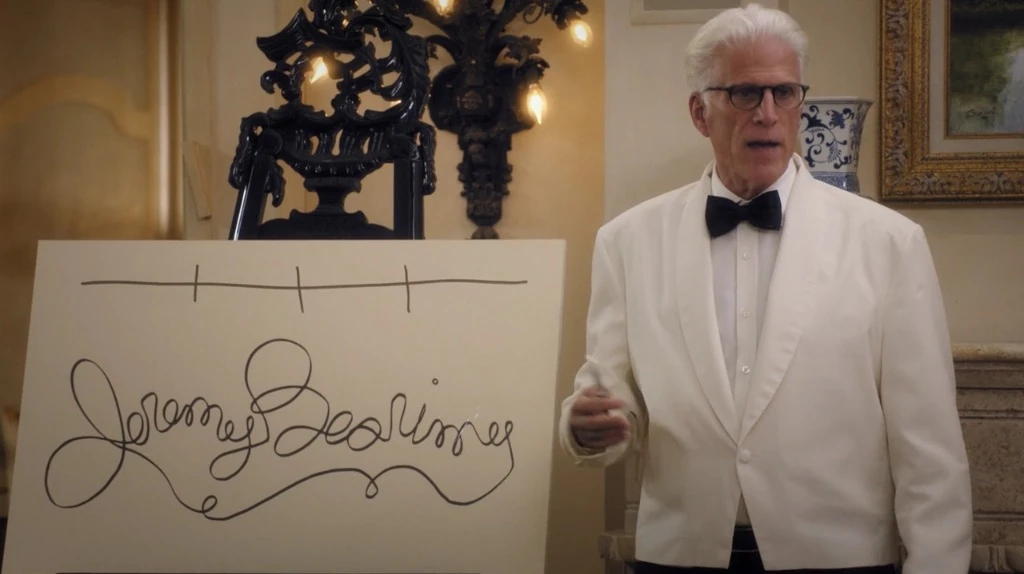
Keeping track of time with Jeremy Bearimy
November
!No read november!
- Start salvaging an inventory & investigate recipes
- Continuation of the repair club at klankschool
- Investigate static site generators for Markdown2HTML2print documentation
- write this proposal
December
- Contact some from the “who” list for possible workshops/DIWO events
- Continue salvaging & documenting
- Prepare DIWO hangouts
- Define DIWO topics
- Build a documentation system
- Continuation of the repair club at klankschool
Januari
- Contact some from the “who” list for possible workshops/DIWO events
- Reflect on salvaged inventory and build the “Components” chapter
- Document 2 recipes for the thesis
- Continuation of the repair club at klankschool
- 1st DIWO hangout at klankschool
Februari
- Continue salvaging
- Document 2 recipes for the thesis
- Reflect on recipes and build the “recipes chapter”
- Continuation of the repair club at klankschool
- 2nd DIWO hangouts at klankschool
March
- Continue salvaging
- Document 2 recipes for the thesis
- Continuation of the repair club at klankschool
- 3rd DIWO hangouts at klankschool
- Complete first draft thesis 14th March 2025 Deadline First Draft Thesis
April
- Continue salvaging
- Finalise thesis
- Continuation of the repair club at klankschool
- 4th DIWO hangouts at klankschool AND/OR BYOP Orchestra 18th April 2025 Deadline Thesis
May
- Continue salvaging
- Prepare printed version of the thesis
- Prepare graduation show
- Continuation of the repair club at klankschool
- 5th DIWO hangouts at klankschool
June
- Continue salvaging (never stop?)
- Continuation of the repair club at klankschool
- 6th DIWO hangouts at klankschool
- Graduation Show
What came before
During my previous studies, my graduation project was about collaborative synthesizers using web technologies. This background in web development means I am very excited about using web2print FLOSS to create a snapshot in time of a living document. In the last couple of years, I’ve shifted my focus a bit from the web as a material to (re)making with hardware. At XPUB, this resulted in turning printers into performative devices, hosting a Colloquium about making music with (salvaged) motors, and an earlier attempt to turn a printer into a battery-powered pen plotter.
ExtraTonal Printer special: Printer Jam riviera
During the Colloquium, the created sound devices didn't just make sound, they also moved mega fast!

This battery powered printer plotter makes a note for every passenger in the maastunnel
In the first year of XPUB, I’ve become more interested in using workshops as a method of sharing and exchanging research. I’ve been part of many workshops around DIY/Circuit Bending/Synthesizer Building/Permacomputing, and found this a very enjoyable, non-hierarchical way of sharing knowledge and uncovering unknown concepts.
Which context
I want to position the research in the middle of the ideas of salvage computing[8] and DIY culture [9]. Within the DIY synth community specifically, DIY/DIWO is a common practice[10] [11], where people explore circuits together during workshops. However, these circuits often come in kits[12], featuring brand-new components and rigid instructions. To me, knowing that e-waste is such a big environmental issue, this goes against my (probably romanticized) ideas of punk in DIY culture, where you create with what is available around you[13].
But maybe (probably) my perspective on DIY culture is outdated and in need of a proper refresh.
Key texts
Dear reader! As I’ll spend a lot of time de-soldering components the coming months, I’m looking for audio references! So if you have any podcasts/radio shows/interviews/audio books/etc, please let me know!
- Collins, N. (2006) Handmade Electronic Music: the art of hardware hacking. https://openlibrary.org/books/OL29487230M/Handmade_Electronic_Music.
- Hertz, G. (ed.) (2012) Critical Making. Hollywood, California: Telharmonium
- Horowitz, P. and Hill, W. (2015) The art of electronics. Cambridge University Press.Press, Hollywood. https://conceptlab.com/criticalmaking.
- Mattern, S. (2018b) ‘Maintenance and care,’ Places [Preprint], (2018). https://doi.org/10.22269/181120.
- Postma, M. (2015) Weggooien? Mooi niet! Virtumedia B.V.
- Richards, J. (2013) ‘Beyond DIY in electronic music,’ Organised Sound, 18(3), pp. 274–281. https://doi.org/10.1017/s1355771813000241.
- John Richards. Speculative Sound Circuits. 2018. DOI: 10.14236/ewic/EVAC18.33
- ‘Salvage computing’ (no date) Salvage computing. https://damaged.bleu255.com/Salvage_Computing/ (Accessed: November 22, 2024).
- Spencer, A. (2005) DIY: The Rise of Lo-fi Culture. Marion Boyars Publishers.
Footnotes
- ↑ Printer Jam: Get a grip on everyday life with OSC (Gulaschprogrammiernacht 2024). See https://media.ccc.de/v/gpn22-457-printer-jam-get-a-grip-on-everyday-life-with-osc.
- ↑ John Richards. Speculative Sound Circuits. 2018. DOI: 10.14236/ewic/EVAC18.33
- ↑ ‘Salvage computing’ (no date) Salvage computing. https://damaged.bleu255.com/Salvage_Computing/ (Accessed: November 22, 2024).
- ↑ Klankschool is a community operating a space (and a server) in the south of Rotterdam. Its members share a common interest in performances, sound art, improvisation, noise, … Each member is a teacher, student, musician, janitor and more. The motivation to have a community-run space is to share sounds, work on projects, organise events, hang out, exhibit works, learn, teach and listen. See https://klank.school/
- ↑ ‘Salvage computing’ (no date) Salvage computing. https://damaged.bleu255.com/Salvage_Computing/ (Accessed: November 22, 2024).
- ↑ A digital shopping cart provided by Mouser Electronics, a large distributor of electronic components. See https://eu.mouser.com/Tools/ProjectCartSharing
- ↑ MQTT and OSC are messaging protocols. MQTT is used for small IoT devices, OSC usually for sound software/hardware. See https://en.wikipedia.org/wiki/MQTT and https://en.wikipedia.org/wiki/Open_Sound_Control
- ↑ ‘Salvage computing’ (no date) Salvage computing. https://damaged.bleu255.com/Salvage_Computing/ (Accessed: November 22, 2024).
- ↑ Critical Making (2012). California, United States of America: Telharmonium Press, Hollywood. https://conceptlab.com/criticalmaking.
- ↑ Richards, J. (2013) ‘Beyond DIY in electronic music,’ Organised Sound, 18(3), pp. 274–281. https://doi.org/10.1017/s1355771813000241.
- ↑ Collins, N. (2006) Handmade Electronic Music: the art of hardware hacking. https://openlibrary.org/books/OL29487230M/Handmade_Electronic_Music.
- ↑ Clacktronics – BUILD YOUR OWN MODULAR – Thonk – DIY Synthesizer Kits & Components
- ↑ Spencer, A. (2005) DIY: The Rise of Lo-fi Culture. Marion Boyars Publishers.