
User:Wordfa/project-proposal: Difference between revisions
| Line 13: | Line 13: | ||
=== How do you plan to make it? === | === How do you plan to make it? === | ||
I plan to make this through a creating and testing a series of frameworks for discussion and reflection, that will be articulated in series of prototypes both digital and physical. These prototypes will iterate on different ways to create discussion (discovery and identification) and reflection (new practices and change drivers) of how aspects of '''technology''' affect our day-to-day lives. | [[File:Signal-2025-11-21-125653.jpeg|thumb|397x397px|Outputs from a prototype workshop]] | ||
I plan to make this through a creating and testing a series of frameworks for discussion and reflection, that will be articulated in series of prototypes both digital and physical. These prototypes will iterate on different ways to create discussion (discovery and identification) and reflection (new practices and change drivers) of how aspects of '''technology''' affect our day-to-day lives. | |||
A framework I am already exploring is the use of speculative writing as a tool to create new imaginaries. Specifically getting people to think about how they carry out certain tasks without the use of '''technology'''. The basic protocol is for participants to identify a recent use of digital '''technology''' (e.g. texting their Mum). Then asking them to identify what their aim was (e.g. to feel connected). I then ask them to speculate how they would try to achieve this same aim without that '''technology''' (write a letter, plan a trip back home, call them). Lastly, there will be a moment to reflect on this speculation and contrast it with their default course of action. | A framework I am already exploring is the use of speculative writing as a tool to create new imaginaries. Specifically getting people to think about how they carry out certain tasks without the use of '''technology'''. The basic protocol is for participants to identify a recent use of digital '''technology''' (e.g. texting their Mum). Then asking them to identify what their aim was (e.g. to feel connected). I then ask them to speculate how they would try to achieve this same aim without that '''technology''' (write a letter, plan a trip back home, call them). Lastly, there will be a moment to reflect on this speculation and contrast it with their default course of action. | ||
Revision as of 13:58, 21 November 2025

Luddites Anon
TLDR: Make new Publics centered around technological critique rooted in people’s lived experience.
What do you want to make?
I want to create a space for people to openly reflect and discuss their unique (but ultimately collective) reservations about our technological society (Ellul, 1964 & Greenfield, 2017). I hope through these collective discussions, solidarity can be found, and therefore a restructuring of our relationship to technological artefacts, interfaces, and systems.
‘While we should not forget that these prescriptive technologies are often exceedingly effective and efficient, they come with an enormous social mortgage’ -- Franklin, Ursula (2004) The Real World of Technology, Anansi Press, p17 ---
A key concept that will play a central role in the project is the term 'Social Mortgage', a term I am borrowing and remixing from Ursula Franklin's 'The Real world of Technology' (2004). This could be articulated as 'Social Harms' or 'the negative impacts on the social sphere'. However, a reason why I like the term ‘mortgage’ is that a mortgage is side effect of an upfront benefit. Something that doesn’t immediately harm us immediately but accrues a balance of negative impacts over a long period of time. Like a deal with the devil. It conveys this idea of being secret or unmentioned, we talk about the benefit but not it’s cost. Likewise, we often acquire new loans (new technologies) to pay off the debts we have from old loans (excising technologies).
The final form of the project is as yet undefined. At this point in time I aim to host a series of workshops and public engagements that will inform the project and allow the ideation various forms/frameworks of discussion. This will also allow me to discover how different audiences respond to the topic. As much as I would like to have a very general audience, I believe I will mainly attract tech-adverse people, especially when it comes to in person manifestations. However, by making something playful and non-technical I am sure I can encourage others to come and share. Ideally I want cross generational conversations, as each generation will be able to tell stories that are unique to their time, and that may have even been forgotten or new to others.
Ultimately I would love to create something that can live on its own, that can thrive without my presence. This could be a game, an interactive exhibition artefact, a website, or a publication. Each of these have strengths and weaknesses, but I trust that through ideation and by trying out different formats of communication, the final form of this project will emerge.
How do you plan to make it?

I plan to make this through a creating and testing a series of frameworks for discussion and reflection, that will be articulated in series of prototypes both digital and physical. These prototypes will iterate on different ways to create discussion (discovery and identification) and reflection (new practices and change drivers) of how aspects of technology affect our day-to-day lives.
A framework I am already exploring is the use of speculative writing as a tool to create new imaginaries. Specifically getting people to think about how they carry out certain tasks without the use of technology. The basic protocol is for participants to identify a recent use of digital technology (e.g. texting their Mum). Then asking them to identify what their aim was (e.g. to feel connected). I then ask them to speculate how they would try to achieve this same aim without that technology (write a letter, plan a trip back home, call them). Lastly, there will be a moment to reflect on this speculation and contrast it with their default course of action.
The aim is threefold, firstly to note the new benefits and experiences that can emerge from this new reality and in so doing inspire and open up new possibilities of thought and action.
Secondly to develop new critiques about the technological world, especially regarding how it would push back on these new practises. Lastly, to create new solidarities between people through the sharing of both common frustrations, values, and hopes.
Key to testing this will be the public moments throughout the year, as well as rapid prototypes tested with peers. As well as getting in touch with local organisations who may be able to host my workshops for wider audiences.
Also interested in incorporating ideas from Titipi regarding how to use collected stories in workshop settings.
Why do you want to make it?
My belief is that we all recognise the Social Mortgage of the technology we interact with every day. Whether these be personal impacts, like feeling empty after binging YouTube or more societal impacts, like worrying that dating apps commodify love; discussion around them often carry a certain level of shame and judgement. I, for one, am very guilty of a kind of ‘Holier than thou’ mentality that ultimately leads people to feel defensive. This leaves me curious to discover if there are better ways to have these discussions, that firstly acknowledges the reasons why people embrace certain consumer technologies.
My aim with this project is to centre peoples personal stories in these discussions, as often technological critique is based in abstract sentiments or inevitably in critiques of capitalism, which conclude with ‘there is no ethical consumption under capitalism’. In the sharing of stories, I hope people find deeper reasons for their usage, discover common patterns, feel less isolated and make changes that they feel are positive in there life, at what ever scale feels right.
I believe our lives are heavily shaped and contorted (Star, 1990b) by the technology we interface with every day. The demands of our frictionless (for the ideal/perfect end user) technology feel so strong, even writing here I have tapped my phone various times to check for any and all notifications. It may be all the books I’m reading, but the world feels very anti-human, with the technological milieu asking us to adhere to a strict set of rules and values. To treat each other as machines, to see our selves as inadequate to machines, to see every problem as a problem only technology can solve.
Weizenbaum states, "that the relevant issues [around computers] are neither technological nor even mathematical; they are ethical." He asks us to not think about what computers 'can' do, but instead to start thinking "in terms of oughts." (Weizenbaum, 1984) I hope that this project can bring more people into this conversation, and allow them to reflect more openly, communally and imaginatively about what/how they want technology to mediate their lives.
Relation to a larger context
Contextually my project is heavily situated in the thinking of Franklin (2004), Weizenbaum (1984) and Ellul (1964). All of them to varying extents talk about technology as a ‘Both the water and the Fish’. In other words there are technological artefacts and also that we live in a technique driven society. When they wrote, personal computing was in its infancy. Now we live in a world where not only do most people have phones, but most societies demand their necessity. Ideas and aesthetics of frictionlessness have also become dominant and hence the overton window of acceptable computational use has changed dramatically. In recent years the explosion of AI and specifically LLMs have dramatically reframed these problems.
I am further influenced by the ways that systems ask us to conform and contort, as illustrated by the writings of Star (1990b) and Guattari (1973). I hope my project highlights these contortions and exposes ways to counter them.
Relation to previous practice
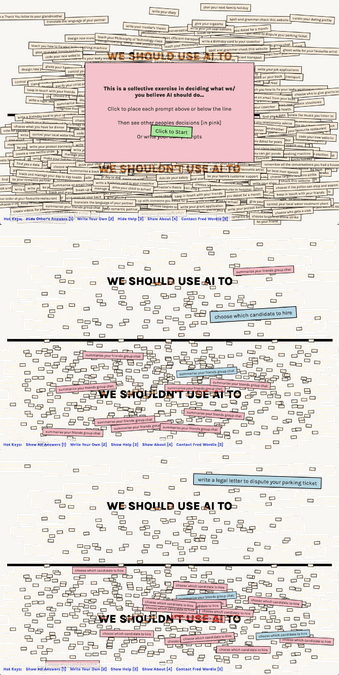
Draw The Line
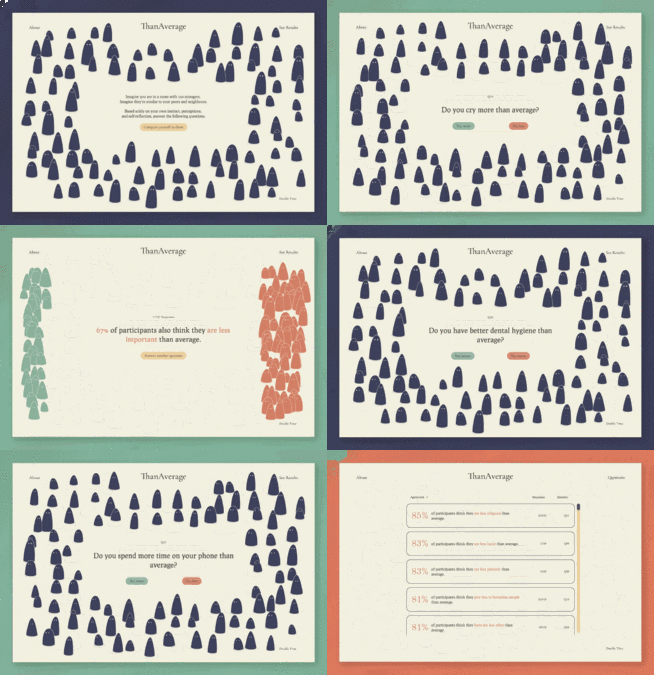
ThanAverage
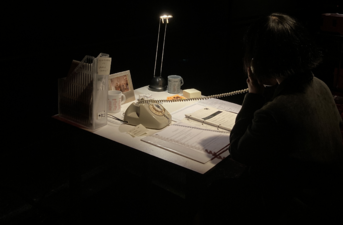
BRC w/ Tan & Farrugia


Participatory Experiences
A lot of my previous practice relates to creating interactive online experiences that aim to engage people.
Both 'Than Average' and 'Draw The Line'are online experiences that basically function as playful questionnaires. Respectively, one asks users to compare themselves to the average (e.g. Are you smarter than average), the second asks you whether we should use AI for a given task (e.g. writing your thesis). Both importantly show you what everyone else answered, inviting you to reflect on your answer. Hence, the experience is not about collecting information but using information as a reflection tool.
'BRC' or 'Bureaucratic Review Committee' (w/ Tan & Farrugia) was a project completed in XPub that used an old phone to invite people to leave messages about their frustrations with Bureaucracy, as well as leave tips to 'hack' the system. Its outcomes were then compiled in a publication and their where plans to keep the phone as movable exhibition piece.
The key traits to bring from all these works is the interaction playful, possibly low effort and using the transparent data collected to foster new meanings in participants understandings.
Technological Critique
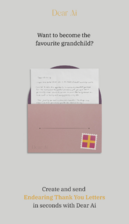
DearAi.xyz
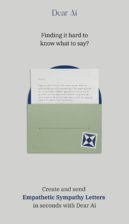
Design Fiction
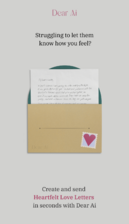
Adverts
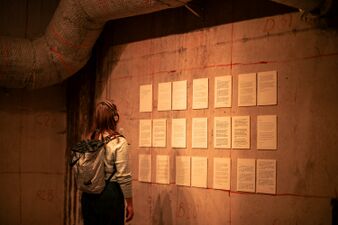
DearAi.xyz Exhibition
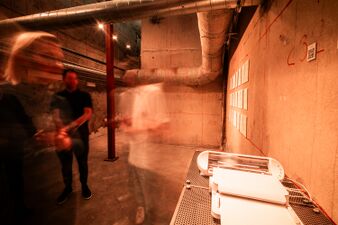
DearAi.xyz Exhibition


A key thread in my work (design fiction, new media, writing and more writing) has been moaning on about technology. My early work dealt mainly with the power relations inherent in consumer technology, but more recent work has dealt with the societal and social impacts of technology. Most recently it has looked at AI and impacts on how we perceive value of previously effort heavy outputs (i.e. If AI can write a love letter, how do we value love letters). Whereas this work is on the preachy side, like my semi cynical design fiction projects, I want this project to be more naive and exploratory.
Who can help you and how?
XPub Staff – Feedback, Technical Pointers, References
XPub Students (& Friends in General) – Discursive sense making, Prototype testing, encouragement
Brendan Howell – Advice, Feedback, References (Especially regarding the realities of living in a less technologically reliant manner)
TITiPI – Advice (Especially regarding the gathering and use of stories in workshops)
Spaces For Workshops – Varia, WAAG, Permacompting
Wider Public–- I need people interacting with what I make
What is your timetable?
Sept-Oct (that went fast):
- Define the subject of my thesis (as my project and thesis will be symbiotic) [done]
- Define this project proposal [done]
- Create prototypes that test discursive frameworks [done]
Nov-Dec:
- Finish thesis outline and project proposal. [done?]
- Read texts relevant to this topic. [doing]
- Host a rapid prototype workshop to be tested with class [done]
- Create an interactive prototype to be tested with the public at our public moment [doing]
Jan-Feb:
- Host a prototype workshop to be tested with XPub public
- Create an interactive prototype to be tested with the public at our public moment
- Research possible publication formats and distribution
Mar-April:
- Host a workshop with wider public
- Create a small prototype publication from workshop outputs so far
- Define final outputs of the project
May-June:
- Create final output (This is vague as of now as I have not yet defined what the final output will be. As I iterate and further develop this project, I will lay out clearer steps for April – June)
Definitions
** Friction/less **

Building of the manifesto, Emoticons don't have Wrinkles (Maurer & Wouters, 2024), I am referring to the ideal and aesthetic of frictionless for the 'ideal' end user. I do feel an irony will emerge that having this easy access to information actually creates more friction in our lives. However, I do think it's important to note that modern consumer technology appears to remove many barriers (political and physical) to information.
** Technology **

How am I defining Technological Artefacts, is still up in the wind a little, as it is a difficult term to contextualise based on different audiences. Whereas an XPuber may say 'stairs' or 'language' are technology. My father would probably not, he would most likely think of technologies as 'phones' or 'gadgets'. Hence, I wonder if it is up for everyone to define technology for themselves? What if technology is a more abstract concept of otherness, than a fixed definition?

Below is a list of alternative Terms that are more specific. However, I do have a concern that these need to be explained whereas just 'technology' has a colloquial understanding that I like.

Digital Communication Devices
Consumer Technology
Digital Devices
Computational Devices
Phones
ICT
References
Ellul, J. (1964) The technological society. Vintage.
Franklin, U.M. (2004) The real world of technology. House of Anansi Press Inc.
Guattari, F. (1974). To Have Done with the Massacre of the Body by Félix Guattari. To Have Done with the Massacre of the Body. Available at: https://azinelibrary.org/other/Guattari_massacre_body_screen.pdf.
Greenfield, A. (2017). Radical technologies : the design of everyday life. London ; New York: Verso.
Maurer, L. and Wouters, R. (2024) Emoticons don't have Wrinkles. Hato Press.
Star, S.L. (1990b) 'Power, Technology and the Phenomenology of Conventions: On being Allergic to Onions,' The Sociological Review, 38(1suppl), pp. 26–56. https://doi.org/10.1111/j.1467-954x.1990.tb03347.x.
Weizenbaum, J. (1976) _Computer power and human reason: From Judgment to Calculation. W H Freeman & Company.