User:Queenfeline/Projectproposal: Difference between revisions
Queenfeline (talk | contribs) |
Queenfeline (talk | contribs) |
||
| Line 9: | Line 9: | ||
::So how exactly will that look like? There will be monthly public gatherings in Rotterdam with whoever is interested and wants to join. For each meeting we will talk about a word, phrase or term (that holds sexism or other forms of oppression (e.g. bitch, bossy, to have the balls to do smth., feisty, cunt)), we will discuss our different understandings and unpack the sexism. Prepared theoretical texts will help us open new perspectives and widen our knowledge. During these meetings we will document the process/ discussion. Along a structure we will formulate and collect our thought on the glossary website. Because speaking about ones vernacular can be very triggering, there will be a code of conduct that the participants will agree on at the beginning of the meetings. | ::So how exactly will that look like? There will be monthly public gatherings in Rotterdam with whoever is interested and wants to join. For each meeting we will talk about a word, phrase or term (that holds sexism or other forms of oppression (e.g. bitch, bossy, to have the balls to do smth., feisty, cunt)), we will discuss our different understandings and unpack the sexism. Prepared theoretical texts will help us open new perspectives and widen our knowledge. During these meetings we will document the process/ discussion. Along a structure we will formulate and collect our thought on the glossary website. Because speaking about ones vernacular can be very triggering, there will be a code of conduct that the participants will agree on at the beginning of the meetings. | ||
::The glossary website will have an introduction about the | ::The glossary website will have an introduction about the project on the homepage (what it is and what it seeks to do) and why it is important to think about language as a feminist tool to reclaim power. I also would like to have a personal reflection (THESIS) about what the process of compiling and making this glossary has taught me, how it changed the way I see language and the way I speak. The navigation to the entries could be a list, a map, pictures, drawings. I will research and test different styles to create an accessible interface. Each entry will contain what the specific group discussed on that specific day. So it's rather a capture of a moment in time and an invitation to rethink and reflect, as I don't intend to dictate meaning in any way. I want to raise awareness and invite others into the process of unlearning, questioning, and rewriting. I see myself very much as part of the group that is still learning everyday. | ||
===How do you plan to make it?=== | ===How do you plan to make it?=== | ||
Revision as of 12:55, 18 November 2025
A Slip Of The Tongue ?
What do you want to make?
- I want to organize consciousness-raising group meetings to discuss the hidden sexism in our vernacular. Along side these meetings I will create a website that documents these meetings in the form of a glossary, since each meeting will revolve around a word, term or sentence.
- This project emerges from a personal realization: as a woman, I have unconsciously reproduced sexist patterns in the way I speak and think. I felt alienated from my own language because I was saying things I don't want to say and that I position myself against very strongly. So realizing that I actively uphold the oppression against women myself everyday was a shock.
- The goal of this project is to spark curiosity and discourse around language and words, to see language as a powerful tool that can be worked with and adjusted. I wish for the meetings and the glossary to become a critical and self-reflective tool to expose hidden bias in our vernacular and make people feel empowered to start a shift in meaning.
- So how exactly will that look like? There will be monthly public gatherings in Rotterdam with whoever is interested and wants to join. For each meeting we will talk about a word, phrase or term (that holds sexism or other forms of oppression (e.g. bitch, bossy, to have the balls to do smth., feisty, cunt)), we will discuss our different understandings and unpack the sexism. Prepared theoretical texts will help us open new perspectives and widen our knowledge. During these meetings we will document the process/ discussion. Along a structure we will formulate and collect our thought on the glossary website. Because speaking about ones vernacular can be very triggering, there will be a code of conduct that the participants will agree on at the beginning of the meetings.
- The glossary website will have an introduction about the project on the homepage (what it is and what it seeks to do) and why it is important to think about language as a feminist tool to reclaim power. I also would like to have a personal reflection (THESIS) about what the process of compiling and making this glossary has taught me, how it changed the way I see language and the way I speak. The navigation to the entries could be a list, a map, pictures, drawings. I will research and test different styles to create an accessible interface. Each entry will contain what the specific group discussed on that specific day. So it's rather a capture of a moment in time and an invitation to rethink and reflect, as I don't intend to dictate meaning in any way. I want to raise awareness and invite others into the process of unlearning, questioning, and rewriting. I see myself very much as part of the group that is still learning everyday.
How do you plan to make it?
- [ ] collect words and terms + theoretical background texts for them
- [ ] the theoretical preparation will simultaneously support the thesis
- [ ] document my process of un-/re-learning
- [ ] come up with a structure for the meetings/ entries
- [ ] write a code of conduct / consent form
- [ ] gather people and have the meetings (I'm gonna be the mediator)
- [ ] actually write the entries (together with the group)
- [ ] write the introduction
- [ ] think about the layout of the website
- [ ] ⤷ make prototypes
- [ ] ⤷ test how people experience them/ get feedback
- always stay in exchange with other people along the way
- the experiences of the meetings as well as the research I will be doing for them will support my thesis, as I will explore how participatory speech practices about sexist language become a feminist method of unlearning and redefinition
What is your timetable?
- November / December
[x] prototype a workshop with the class
[ ] prepare a first meeting
[x] write code of conduct
[ ] make a consent/ethics from for participants
[ ] actually have the meeting
[ ] For the first public moment: showcase what i already collected and let people give me feedback on the structure
[ ] prepare the T4 assessment
[ ] Finalize the first entry + introduction
[ ] Thesis: draft the first chapter
- January / February
[ ] collect more words and have more meetings
[ ] come up with a structure for website
[ ] come up with a layout for website
[ ] make prototype for website and get feedback
[ ] Thesis: continue writing (13.Feb first draft deadline)
- March / April
[ ] continue with meetings
[ ] code the final prototype into actual website
[ ] revise thesis (6. March second draft deadline)
[ ] revise even further and finalize (17. Apr deadline)
- June / July
[ ] continue with meetings
[ ] update / debug website
[ ] think about how my work can be exhibited
[ ] prepare the exhibition
[ ] prepare for the final assessment
[ ] enjoy the grad show and be proud :)
Why do you want to make it?
- Words hold power. Words help us validate and make sense of our experiences. Words make our experiences communicable. Language is not just a list of words but a system of power that we uphold and reinforce everyday through speaking. The words we use shape us and our experiences but that mechanism also works the other way around, we can adjust our language to shape the world around us. I want to make people notice, in themselves and others, how and in what ways language is used to oppress and how we can uncover and actively fight that. I want to spark curiosity around our vernacular and raise awareness about the hidden sexism. Just like the consciousness-raising groups in the 60's and 70's feminist movement I want to open a space to share personal experiences. I hope to create a sense of community and solidarity as well as a source for political strength.
- I want to make a glossary, because it's important to a particular subject or activity. It provides me with the framework of a lexicon-like structure, since I will deal with words, but at the same time it still leaves freedom in structuring and writing the entries.
Who can help you and how?
- I know that will need help in coding from my classmates and tutors. My friends, and the participants will help me with contributions and feedback.
- I want to reach out to Michelle Teran, Ali Sahin from WdKA to get in touch and talk. They helped making the book "WOR(L)DING" which is also a glossary and i think they might have some useful and interesting insights and opinions.
- I have also been referred to Clara Balaguer as a help for my role as the mediator during the meetings. I was told she know how to navigate discomfort and mediate and guide group discussions.
Relation to previous practice
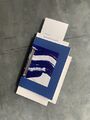
This is my bachelor project where I experimented with words and their meaning.
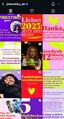
I worked for Pinkstinks Germany before starting my master. The feminist NGO does educational work all about feminism.
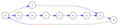
Our Alphabet Soup (shared glossary) we created during first year

My own glossary that I started during the first year


- During my bachelors I visited Oswald Eggers course "Sprache und Gestalt" ("language and design") where we would read many different, mostly philosophical texts and then investigate and understand them. This was my favorite course and I was fascinated by what we would unpack in these texts. I really enjoy uncovering the hidden meanings of words. So for my bachelor I wrote essays and poems that would play with the understandings of words to show that a word can have different meanings.
- Later I worked for the feminist organisation PINKSTINKS Germany. Here I helped develop a feminist glossary with technical terms around feminism. This is a more general glossary about new words that emerged in the feminist discourse in Germany that are not self-explanatory. The goal here was to keep the feminist discourse accessible and the vocabulary clear in order for people to understand the feminist mission.
- During our first year we made our Alphabet Soup and I really enjoyed the process of experimental glossary writing. It opened new ways in which a word can be explained and understood and helped me further realize that we can have different understandings of the same words not just through usage but also because of different cultural upbringings. I further explored that in my own glossary which i called Idioticon. Here i collected words that I didn't knew and concepts that are interesting to me. I eventually developed a habit of researching the meaning of words, even of those that are familiar to me. I soon came across the book ‘wordslut’ by Amanda Montell, which opened up new perspectives on the English language to me and made me realize how important language is in relation to feminism.
Relation to a larger context
- In the broadest sense my project relates to glossaries in general, as they are listing alphabetically terms or names important to a particular subject or activity. I am taking that approach as a base to then connect it with lived experiences and participatory speech acts. In order for me to do that I rely on technical feminist glossaries (like these from german magazines Pinkstinks, Missy and books like: "A Feminist Dictionary" by Cheris Kramarae and Paula A. Treichler(1985)) that enable an accessible feminist discourse for me and the participants of the meetings.
- And I take it a step further as I question the static, man-made, inherited meaning of words and language and encourage to discover and create new ways of using and playing with language. For that I was definitely inspired by experimental glossaries like "WOR(L)DING" by Michelle Teran, Ali Şahin, Kari Robertson and Pablo Lerma and the "Glossary of Undisciplined Design" by Anja Kaiser and Rebecca Stephany because they expand the concept of a glossary.
- Additionally there are projects like "wordmord" by Angeliki Diakrousi and the Manyfesto or how to dirtystruct the lexicon which break or dirtystruct (dirty + con/distruct/disrupt) the norms, rules and ideals of a standard language. These inspired me to also have the courage to actively shape and shift the meaning of words and not just list them, and to make language my own and allow myself to play with it.
- During early stages of research I then encountered the BITCH Manifesto by Jo Freeman which further confirmed the importance and fun it is to actively reclaim a word. With and through Jo Freeman I was diving deeper in the topic of consciousness-raising groups from the late 60's and 70's Feminist movement, as they were a space to exchange and express injustices women experienced. These meetings were a powerful tool as they lead to a feeling of togetherness, validated single voices and shifted the focus from the individual to a broader, structural problem. Which ultimately resulted in a more aware and proactive mindset.
References/bibliography
- Montell, Amanda (2019) Wordslut HarperCollins Publishers New York
- Teran, Michelle ; Sahin, Ali ; Robertson, Kari ; Lerma, Pablo (2024) Wor(l)ding: A Harvested Glossary for Social Justice in Arts Education and Beyond HumDurmPress & Meteoro Editions
- Cameron, Daborah (1986) Feminism and Linguistic Theory Macmillian London
- Fritsch, Kelly ; O'Connor, Clare ; Thompson, AK (2016) Keywords for Radicals: The contested Vocabulary of Late-Capitalist Struggle AK Press Oakland
- Williams, Raymond (1976) Keywords: A Vocabulary of Culture and Society Oxford University Press
- Spencer, Dale (1998) Man Made Language Pandora New York : Distributed in U.S.A. by New York University Press
- Kaiser, Anja; Stephany, Rebecca (2nd Edition 2024) Glossary of Undisciplined Design Spector Books Leipzig
- Kramarae, Cheris; Treichler, Paula A. (1985) A Feminist Dictionary Pandora Press Boston