User:Queenfeline/Projectproposal: Difference between revisions
Queenfeline (talk | contribs) |
Queenfeline (talk | contribs) |
||
| Line 60: | Line 60: | ||
::Why make it includes two main questions. First, ''why should one concern oneself with words and language?'' and second, ''why make a glossary?''. | ::Why make it includes two main questions. First, ''why should one concern oneself with words and language?'' and second, ''why make a glossary?''. | ||
::To answer the first question: Words hold power. Words help us make sense of our experiences. Words make our experiences communicable. Language is a human tool for organization, so inherently language is always a reflection of the society we find ourselves in. Our society is made by men for men, and everyone who does not identify with that is excluded and oppressed in one or many ways. To understand in what ways this exclusion and oppression takes place means gaining knowledge in how to fight it. So in using certain words we can reclaim power over the man-made language. Speaking is about representation. Who is allowed to speak and who is listened to? Who defines meaning and how does language reflect and reinforces power dynamics? Feminists are deeply concerned with language and linguistic to be able to speak and be heard in that and many other discourses. I also learned in researching this topic, that there are so many hidden sexist structures in our vernacular, that we uphold our own oppression without even noticing it. So i want to make people notice in themselves and in others how and in what ways language is used to suppress women and how we can actively fight that. | ::To answer the first question: Words hold power. Words help us make sense of our experiences. Words make our experiences communicable. Language is a human tool for organization, so inherently language is always a reflection of the society we find ourselves in. Our society is made by men for men, and everyone who does not identify with that is excluded and oppressed in one or many ways. To understand in what ways this exclusion and oppression takes place means gaining knowledge in how to fight it. So in using certain words we can reclaim power over the man-made language. Speaking is about representation. Who is allowed to speak and who is listened to? Who defines meaning and how does language reflect and reinforces power dynamics? Feminists are deeply concerned with language and linguistic to be able to speak and be heard in that and many other discourses. I also learned in researching this topic, that there are so many hidden sexist structures in our vernacular, that we uphold our own oppression without even noticing it. So i want to make people notice in themselves and in others how and in what ways language is used to suppress women and how we can actively fight that. | ||
::To answer the second question: A dictionary claims to be neutral and encompasses | ::To answer the second question: A dictionary claims to be neutral and encompasses all the relevant words. Even though there surely is a moment of deciding which words to put in and how to describe them, which cannot inherently be objective. Anyways, a glossary doesn't claim this neutrality and is in a classical sense a list of terms and words that are special to a certain context, that may be misunderstood (in that specific context) without explanation. I also see it as a moment to change the point of view on a word and recontextualise it. So what happens to a glossary if we abandon objectivity and embrace subjectivity? What if we let the lived experiences define our words and how we use them? | ||
::So all in all I really hope that on the way to a more equal society, i can contribute my little piece to the pie and help the progress of building a language that is more inclusive and representative of all kinds of experiences not just mens. I want to help people notice the ways they're keeping up the sexist system and how to change that. | ::So all in all I really hope that on the way to a more equal society, i can contribute my little piece to the pie and help the progress of building a language that is more inclusive and representative of all kinds of experiences not just mens. I want to help people notice the ways they're keeping up the sexist system and how to change that. | ||
===Who can help you and how?=== | ===Who can help you and how?=== | ||
Revision as of 16:00, 10 November 2025
proposed proposals
Graduate proposal guidelines
potential glossary
What do you want to make?
- This project emerges from a personal realization: as a woman, I have unconsciously reproduced sexist patterns in the way I speak and think. I felt alienated from my own language because I was saying things I don't want to say and that I position myself against very strongly. So realizing that I actively uphold the oppression against women myself everyday was a shock. I want other people to recognize, and talk about the sexism in language and take an active part in changing that.
- So I want to start a consciousness-raising group in/around WdKA. Public gatherings with whoever is interested and wants to join. For each meeting we will talk about a phrase/ term/ word (that hold sexism or other forms of oppression (e.g. bitch, bossy, to have the balls to do smth., feisty, cunt)), we will discuss our different understandings of it and I will bring some theoretical background/ texts to back up and widen our knowledge. During these meetings we will document the process/ discussion and along a structure we will formulate and collect our thought on a glossary website. Because speaking about ones vernacular can be very triggering, there will also be a code of conduct for these meetings.
- The glossary website will have an introduction about the topic on the homepage (what it is and what it seeks to do) and why it is important to think about language as a feminist tool to reclaim power. I also would like to have a personal reflection about what the process of compiling and making this glossary has taught me, how it changed the way I see language and the way I speak. The navigation to the entries is still unclear, it could be a list, a map, pictures, drawings... Each entry will contain what we as a specific group discussed on that specific day. So it's rather a capture of a moment in time and an invitation to rethink and reflect, then a dictated meaning (like in a dictionary).
- Additionally there will be a guide/ structure of these meetings (how they work for us) in case somewhere in the world someone feels inspired to talk about language and also wants to start group meetings. (I know..., but let a girl dream.) That's also the reason why I want to make the glossary as a website and not printed matter.
- The goal of this project is to spark curiosity and discourse around language and words, to see language as a powerful tool that can be worked with and changed. And i hope to inspire people to question their own use of certain words or expressions. I wish for the meetings and the glossary to become a critical and self-reflective tool to expose hidden bias in our vernacular and make people feel empowered to start a shift in meaning.
- IMPORANT NOTE: I don't want to dictate meaning, I want to raise awareness! I want to invites others into the process of unlearning, questioning, and rewriting. I see myself very much as part of the group that is still learning everyday.
- There is also going to be a tool for printing. You can select the words you find interesting / useful / important and make a .pdf that you can print and make a little zine out of.
- I want to make it easy to share and so well explained, that everyone can understand it and no one feels excluded. I think it is very important that we keep the discourse accessible, so people know what it i about and what they can do about it.
How do you plan to make it?
- [ ] collect words and terms + theoretical background texts for them
- [ ] document my process of un-/re-learning
- [ ] come up with a structure for the meetings/ entries
- [ ] write a code of conduct (let people transform and change as we go)
- [ ] gather people and have the meetings (I'm gonna be the mediator)
- [ ] actually write the entries (together with the group)
- [ ] write the introduction
- [ ] think about the layout of the website
- [ ] make prototypes
- [ ] test how people experience them/ get feedback
- always stay in exchange with other people along the way
- target group: (most realistically) 20-somethings in my circle (and I hope it will spread out from there, but that is out if my hands) who are already somewhat feminist-minded and want to dive deeper (because they are most likely to speak the same zeitgeisty slang that I also speak)
What is your timetable?
- Nov/dec
– prepare a first meeting
– write code of conduct
– actually have the meeting
– For the first public moment: showcase what i already collected and let people give me feedback on the structure
– Finalize the first entry + introduction
- Jan/Feb
– Collect more words and have more meetings (every other week?)
– make prototype for website and get feedback
- Mar/Apr
– make the final prototype into actual website
- June/July
– I would also love to make a book version of it at some point closer to graduation to have a physical version of it. (add dates when printed to it so people know its only a extract from a specific moment of time.)
Why do you want to make it?
- Why make it includes two main questions. First, why should one concern oneself with words and language? and second, why make a glossary?.
- To answer the first question: Words hold power. Words help us make sense of our experiences. Words make our experiences communicable. Language is a human tool for organization, so inherently language is always a reflection of the society we find ourselves in. Our society is made by men for men, and everyone who does not identify with that is excluded and oppressed in one or many ways. To understand in what ways this exclusion and oppression takes place means gaining knowledge in how to fight it. So in using certain words we can reclaim power over the man-made language. Speaking is about representation. Who is allowed to speak and who is listened to? Who defines meaning and how does language reflect and reinforces power dynamics? Feminists are deeply concerned with language and linguistic to be able to speak and be heard in that and many other discourses. I also learned in researching this topic, that there are so many hidden sexist structures in our vernacular, that we uphold our own oppression without even noticing it. So i want to make people notice in themselves and in others how and in what ways language is used to suppress women and how we can actively fight that.
- To answer the second question: A dictionary claims to be neutral and encompasses all the relevant words. Even though there surely is a moment of deciding which words to put in and how to describe them, which cannot inherently be objective. Anyways, a glossary doesn't claim this neutrality and is in a classical sense a list of terms and words that are special to a certain context, that may be misunderstood (in that specific context) without explanation. I also see it as a moment to change the point of view on a word and recontextualise it. So what happens to a glossary if we abandon objectivity and embrace subjectivity? What if we let the lived experiences define our words and how we use them?
- So all in all I really hope that on the way to a more equal society, i can contribute my little piece to the pie and help the progress of building a language that is more inclusive and representative of all kinds of experiences not just mens. I want to help people notice the ways they're keeping up the sexist system and how to change that.
Who can help you and how?
- I know that will need help in coding from my classmates and tutors. My friends, and basically everyone I know, can help in contributing to the database, adding words and definitions / quotes / anything that comes to mind. I also set up a little list on the cord board for people to leave words that should be in a feminist glossary.
- I want to reach out to Michelle Teran, Ali Sahin from WdKA to get in touch and talk. They helped making the wor(l)dings book which is also a glossary and i think they might have some useful and interesting insights and opinions.
Relation to previous practice
- It combines my interests in language and words and the feminist fight for equality. I find it so fascinating to research words and find out where they come from and what they really mean, how meaning changes over time and with the context we use it in.
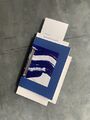
This is my bachelor project where I experimented with words and their meaning.
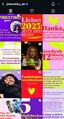
I worked for Pinkstinks Germany before starting my master. The feminist NGO does educational work all about feminism.

Our Alphabet Soup


- During my bachelors I visited Oswald Eggers course "language and design" where we would read many different, mostly philosophical texts and then investigate and understand them. This was my favorite course and I was fascinated by what we would unpack in these texts. Later I worked for the feminist NGO PINKSTINKS Germany. Here I helped develop a feminist glossary with technical terms around feminism. During our first year we made our Alphabet Soup and I really enjoyed the process of experimental glossary writing. It opened new ways in which a word can be explained and understood to me and helped me realize that we can have different understandings of the same words. I further explored that in my own glossary which i called Idioticon. Here i collected words that I didn't knew and collected concepts that are interesting to me.
Relation to a larger context
- There are already some feminist glossaries out there:
- – Kramarae, Cheris; Treichler, Paula A.(1985) A Feminist Dictionary , Pandora Press (Routledge & Kegan Paul plc)
"It places women at the center of language and uses definitions and quotation to take us on a fascinating journey through the development and use if the english language from diverse feminist perspectives. A Feminist Dictionary illustrated women's linguistic contributions: they ways in which women have sought to describe, reflect upon and theorize about women, language ,and the rest of the world." - – Feminist Magazines in Germany also work with glossaries, there are for example: Pinkstinks, Edition F, Missy
- There is this project called wordmord (by Angeliki Diakrousi and others) which "believes that the violence of language is not eradicated by merely deleting/erasing words, but rather by transversing their violent imposition through specific practices that trouble and disrupt grammatical consistency, semantic norms, ‘correct’ pronunciation, ‘proper’ bodily posture. The rupture of linguistic limits suggests the possibility of experiencing language in its materiality."
- I also found the open spell book (by Greta Lüdemann, Uma Grotrian-Steinweg 2024). They say: "Whilst reading into Feminist theory we dived deep into topics of all kinds. Along the way, we encounter key words that came up in different texts and give a sense of commons, controversies and struggles. By bringing together multiple voices that speak about these terms we want to capture the poetics of feminist theory, move beyond linear reading and open an experimental approach towards building knowledge. We invite you to dig trough, play with and contribute to our quote collection. This is not done. This is evolving."
- The Manyfesto or how to dirtystruct the lexicon is also super interesting as it "proposes a rhizomatic paralexicon-in progress as a way to dirtystruct (dirty + con/distruct/disrupt) the notion of a universal, formal and normative lexicon, which usually establishes linguistic norms and the ideal of a standard language."
- The BITCH Manifesto by Jo Freeman is a very empowering approach to change the meaning of a word and reclaim it.
References/bibliography
- Montell, Amanda (2019) Wordslut HarperCollins Publishers New York
- Teran, Michelle ; Sahin, Ali ; Robertson, Kari ; Lerma, Pablo (2024) Wor(l)ding: A Harvested Glossary for Social Justice in Arts Education and Beyond HumDurmPress & Meteoro Editions
- Cameron, Daborah (1986) Feminism and Linguistic Theory Macmillian London
- Fritsch, Kelly ; O'Connor, Clare ; Thompson, AK (2016) Keywords for Radicals: The contested Vocabulary of Late-Capitalist Struggle AK Press Oakland
- Williams, Raymond (1976) Keywords: A Vocabulary of Culture and Society Oxford University Press
potential thesis
NOTES
What do you WANT to write? (what will the text
be about? What do you want to explore?
Be clear about HOW you want to tell your story.
Outline 3 key issues you want to explore:
1. The power that language holds
2. how sexist language is and how it shapes the way we live
3. The power of reclaiming words as an activist act
- I want to write an analytical essay. I want to dive into the sociolinguistics and uncover how sexist and man-made our vernacular is and how we can take a step into changing that. Language is about representation. Who you speak about and how, directly affects that groups position in society and their experience in this world. I want to write about the phenomenon that female words get devalued over time and why that is. Adding to that i want to write about the active work of reclaiming these words to reclaim power (for ourselves and ultimately how we're seen and treated in society). Words literally create the world around us and has an impact on or experiences in this world.
Chapter outline (what do i expect to find?)
- 1. The power language holds
- Here i want to show how the words we use literally create the world around us. Language gives names to our experiences. It reflects and reinforces our believes, the existing power structures and structures of oppression. Language is strategically used to exclude certain groups from the societal discourse (e.g. in form of linguistic alienation).
- Furthermore i want to write about the phenomenon that words who get connected to females, experience an devaluation over time. What seems like happens by accident is a reflection on the sexist society we find ourselves in. In comparison to that, 'male' words almost always experience an revaluation. Why is that?
- 1. The power language holds
- 2. How sexist language shapes our lives
- I want to uncover fields of everyday life that hold more sexism then we expect or are aware of. From address terms to curse words. Understanding that language itself is not sexist but the way we use it.
- 2. How sexist language shapes our lives
- 3. The powerful act of reclaiming language
- This chapter is gonna contain how the reclaiming of a 'female' word needs active work to experience an revaluation.
- 3. The powerful act of reclaiming language
holy shit is is all still way to broad...
- Uh maybe i do all this on the example of one word! (e.g diva/bitch/cunt...) Then the structure would more likely look like that:
- 1. The etymology of the word
- So to say a glimpse in the history of the word. How is has been used throughout the years and how the dictionary defined then and now.
- 2. De- and revaluation
- De- and revaluation of words in general. So how and why does that happen? Then more specifically on the example on the word. How and why did it happen in this case?
- 3. The act of reclaiming a word for oneself and the societal consequences
- Transitioning into: How 'female' words need active reclaiming in order to experience a revaluation. What reclaiming is and how it works (on the example on language).
TO–DO – specify what i mean with 'female' word (wordslut) –
FEEDBACK
- –More clarity on the submissions!
- –What feminist context? What context? Wie einkreisen? More intentional and smaller
- –Words that have personal meaning - that are being understood / affect you in your life – Glossary for a specific place (online/offline) ?
- –Public moment: collect in low tech form and let people contribute in other forms than website
- –What makes mine different? What do I want out of this????
- –Fred idea: Make the glossary a plug in? Make it to adapt to other applications
- –Whats up with Scotland – Glasgow ? Why so different?
- –Claiming/ reclaiming also happens in right wing/extremist circles
- – protocols for contributing a word or to a word
- – these is a need to come together/presents! online doesnt really work – how playful ways to come together
- – how to interact with language offline and reflect
- – Language is connected to situations and experiences – need to connect them to actually use the "new" words lanuage
- – oral story telling – easy to remember story to repeat and make it easy to remember
- – braiding sweet grass – book
- – how to pracice language
How has the feminist reclamation of the word “cunt” transformed a misogynistic insult into a symbol of empowerment, and what does this transformation reveal about language and power?
Intro
- Introducing the upcoming chapters briefly:
- First, the relationship between language, power and representation. Why is language a feminist issue? How is it used to uphold and reinforce power structures? Who gets to speak and who is spoken about (in what way)?
- Second, the cultural taboo around “cunt”, its history (etymology) and its significance. When did this word emerge? What was the 'original' meaning and how did it change over time? How did the word became a site of misogyny? What is the “problem” reclamation is responding to?
- Third, the active fight for reclaiming a word. How does reclaiming work? Who gets to reclaim? How does the reclaiming of cunt teaches us who controls meaning?
- State what i wish to transport with this essay: how reclaiming language reclaims power. Showing how reclaiming is a strategic act of resistance that exposes how meaning is socially constructed (embedding chapter one) and can be rewritten / changed.
- Introducing the upcoming chapters briefly:
Chapter 1
- This chapter explores how language shapes and sustains power relations.
- Who gets to speak, who is spoken about, and in what way? Through feminist linguistic theory, it will uncover how everyday speech patterns and word meanings reflect patriarchal values and how this creates linguistic inequality.
- Deborah Cameron – how language doesn’t just reflect reality but creates it. How language is a weapon, used by the powerful to oppress their subordinates. How words define social visibility. Being “unnamed” or “misnamed” is a form of erasure / silencing / invisibility.
Chapter 2
- This chapter explores the etymology of the word “cunt”.
- What did the word mean throughout history and how did the once neutral anatomical term (referring to the female genitals) become one of the most reviled words in the English language?
- – The connection between linguistic taboos and the societal control over women’s bodies and sexuality. How the changing attitudes toward sexuality, modesty, and female anatomy under patriarchy influenced the change in meaning, resulting in silencing of female sexuality, alienation from the female body, and internalized shame. (How there is a broader linguistic phenomenon where female-coded terms become devalued for example mistress, madam, hussy. But maybe thats too much)
Chapter 3
- This chapter explores how feminist movements and thinkers have reclaimed “cunt” as a term of empowerment and political resistance, and what this process reveals about who controls meaning.
- How does semantic reclamation work? –> How marginalized groups reappropriate derogatory terms.
- – Example: Inga Muscio’s Cunt: A Declaration of Independence (1998) and in todays pop-culture / internet
- (The intersectional issues: race, class, sexuality. Who feels empowered and who alienated by reclamation? The critiques of white feminism and inclusivity within linguistic activism)
- Making clear / showing that words have constructed meaning, made through societal consensus and not inherent meanings set in stone. Connecting to chapter 1, how meaning and power are connected and how reclaiming language means reclaiming power. Show how reclamation is also a refusal to let patriarchal discourse dictate women’s self-definition.
Conclusion
- Bringing back the research question and stating a short and concise summary of the main arguments from the text. How feminist linguistic activism does not just change words, but changes the worlds we inhabit through them.
Glossary
- My thesis needs (of course) a glossary duh! In here will we words like: woman / semantic reclamation / reappropriation / semantic derogation / tbc...